My name is David Chen, I'm 37, and I work as a product manager at a tech company. This isn't a medical article — it's just my own two-year "battle" with my eyes, written down in the hope it helps someone else who stares at screens all day and feels the world getting blurrier.
Age 35, and eye strain hit me out of nowhere
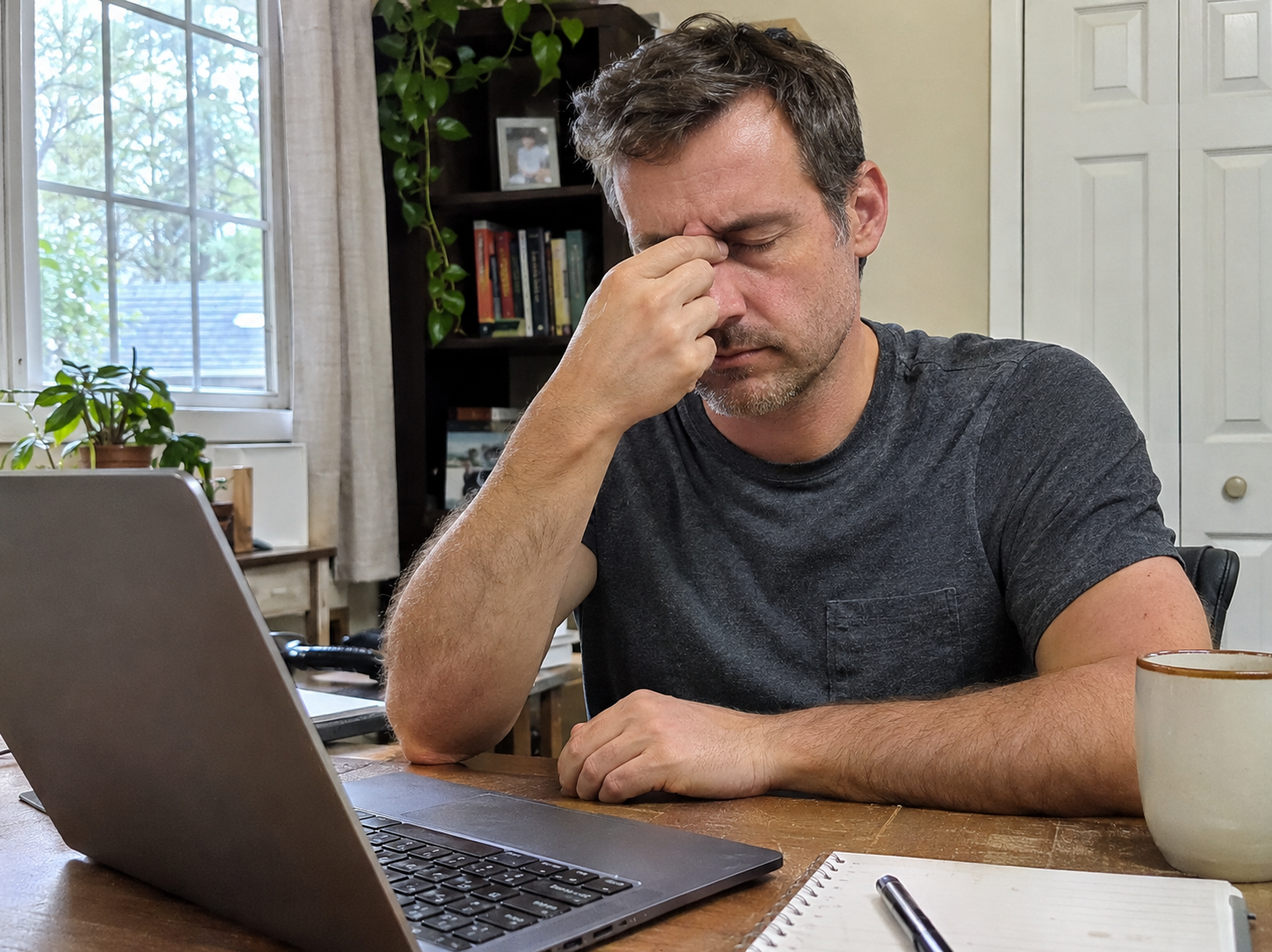
Honestly, when I was younger I never thought of my eyes as a "problem." But everything changed around 35. Staring at a computer and phone for twelve-plus hours a day, my eyes would start aching and feeling swollen by mid-afternoon, and by the time I got home, looking at my phone felt like looking through fog. The worst part was the constant dryness and stinging — sometimes I'd have to squint just to read a road sign while driving.
My doctor said this was a pretty classic case of eye strain — years of close-up screen work combined with age-related decline in the eye's focusing ability. At the time, though, I didn't take it too seriously. I kept telling myself it would just pass.
I tried enough products to fill a drawer
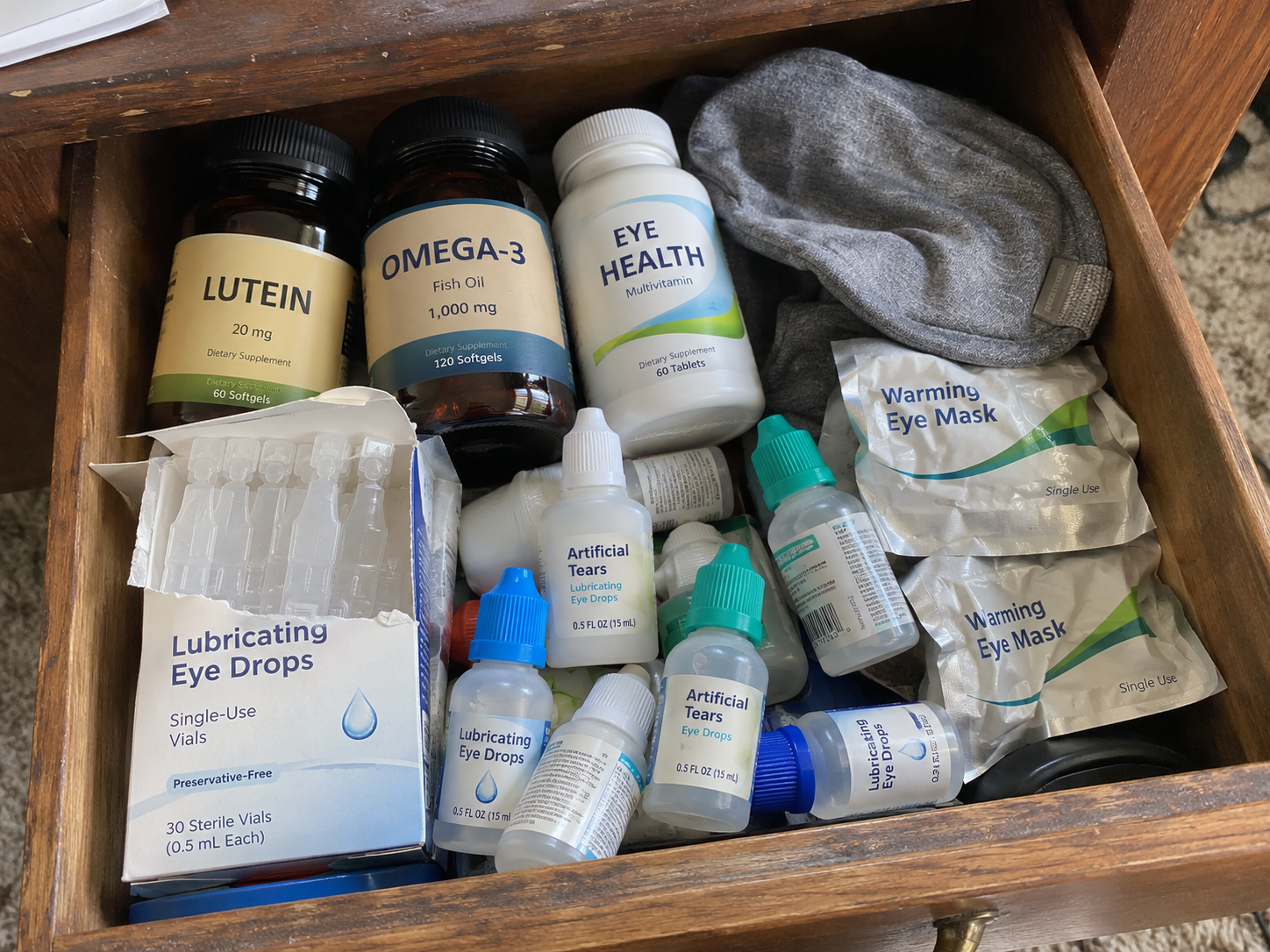
As things got worse, I started grasping at anything that might help: blue-light glasses, every kind of eye patch and mask, a heated eye massager, drops that promised to "relieve fatigue"... I spent a fair amount of money, and my drawer filled up with half-used products I'd given up on.
Some of them did bring brief relief — a few minutes of warm compress genuinely felt good — but by the next workday, the symptoms were right back. The hardest part was that for a while I started wondering if something was seriously wrong with my eyes, which made me anxious, kept me up at night, and dragged my mood down with it.
"It wasn't that I hadn't tried. I just hadn't found the thing that actually worked for me."
My doctor's recommendation: Visivra
The turning point came during a routine eye checkup last year. I told my doctor about the whole two-year ordeal, and instead of rushing to prescribe something new, she first asked in detail about my screen habits, my sleep schedule, and how each product I'd tried had actually felt.
Eventually she mentioned Visivra, explaining it's something she recommends to patients with long-term eye strain who've already tried multiple approaches without much success. She also reminded me that pairing it with a regular sleep schedule and shorter stretches of continuous screen time was what would actually give consistent results.
I started using it with a "nothing left to lose" attitude, while also following her advice to adjust my habits — taking regular breaks for my eyes and cutting down on scrolling my phone before bed.

Visivra

Seeing that I wasn't the only one who'd struggled — and found something that finally worked — gave me the confidence to stick with it.
Where I am now
After sticking with it for a while, I noticed a real difference — that afternoon feeling of "my eyes can barely stay open" happened a lot less often, and the dryness and stinging eased up considerably. Of course, I know this isn't magic from any single product; it's really the combination of better habits, regular breaks, and sticking with it consistently.
If you're like I was at 35, starting to feel like your eyes just won't cooperate anymore, here's what I'd say: don't wait it out, and don't grab at random fixes. Get a proper eye exam and let a professional give you advice based on your actual situation — that matters a lot more than guessing on your own.
A few tips for anyone dealing with the same thing
- Every 30–40 minutes of screen time, look away and rest your eyes for a few minutes (the 20-20-20 rule: every 20 minutes, look at something 20 feet away for 20 seconds)
- Adjust your screen brightness relative to your surroundings — avoid settings that are too dark or too bright
- Cut back on long stretches of close-up screen use right before bed
- If eye strain persists or worsens, see a doctor promptly for proper evaluation and advice, rather than relying long-term on any one product on your own
This article shares a personal experience and is not medical advice. If you're experiencing vision or eye discomfort, please consult a qualified eye care professional for diagnosis and guidance.